While searching for good poems to use for my paper on Allen
Ginsberg, I found a poem called “America.”
This free verse poem uses many different voices in first person that air
their grievances about the United States, and it grabbed my attention from the
first line: “America I've given you all
and now I’m nothing.” Those who do not
know Ginsberg would probably think that this would be some sort of patriotic
poem, but that first line surely proves them wrong. The narrators in “America” range from a weary
person who feels like America has taken everything away from him to an angry
narrator who has become tired of America’s demands, someone who has become
obsessed with Time Magazine, a
worried politician, one who makes outcries of America’s abuses, an uneducated
person who blames the Russians and Chinese for everything, and a voice who
seems driven to change America’s condition.
I found it very interesting how all of the voices were in just one poem,
sometimes not even separated by different stanzas. Still, it was not tough to find out where the
voices changed because of the shift in tone and sometimes grammatical
structure. At first I did not understand
a few of the numerous allusions, all of which related to the Cold War era, but I
was pretty sure that all of the events would be very clear to any readers of
Ginsberg’s time because they usually related to America’s abuses. I noticed a few similarities among all of the
voices such as the use of anaphora and relatively short sentences. Lastly, the line “It occurs to me that I am
America” struck me the hardest in the poem.
It is probably the most important line, and it is an almost jarring change
because the narrators have been complaining about America for the entire first
half of the poem only to realize that they are talking to themselves. I feel that this means that in some way each
voice has become part of the corruption of America’s society, which I thought
was a very powerful message from Ginsberg.
“America” certainly made me want to read more of Ginsberg’s works even
though I knew that next up was “Howl,” a poem more than twice this one’s
length.
GUMIGUMIGUMI

Made by moi
Friday, March 20, 2015

Monday, March 2, 2015
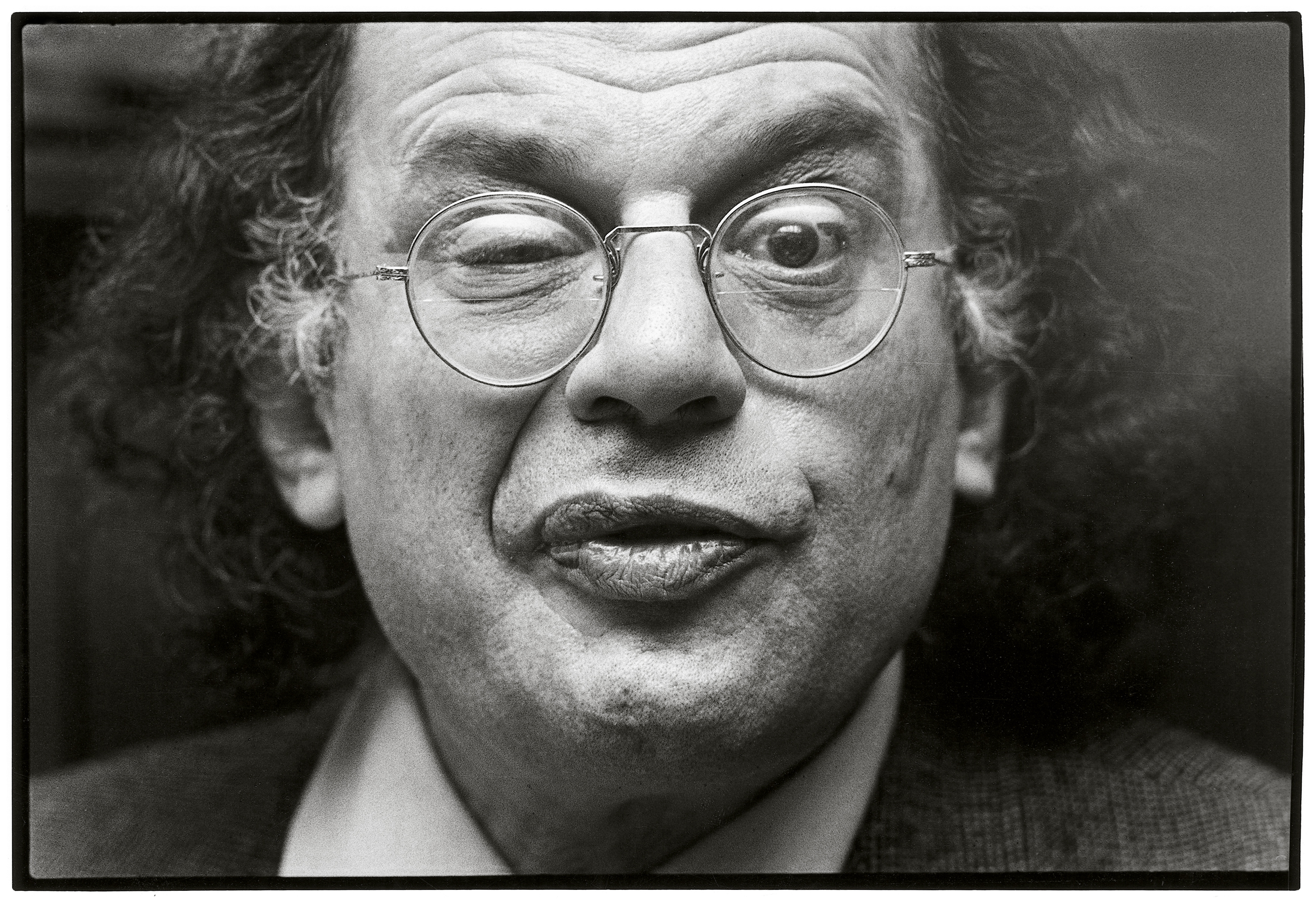
Allen Ginsberg
Tuesday, January 27, 2015
This Is Water Reaction

David Foster Wallace’s “This Is Water” commencement speech
provides useful guidelines on how one should use a more open mentality to the
frustrating, mundane events in life in order to make the most out of every
moment. Mainly using an example of
getting caught in rush hour traffic and then having to wait in a long grocery
store line, Wallace talks about how we go on default mode or autopilot by
allowing ourselves to think that we are the center of the universe. It certainly makes me wonder about how in a
few years, I will be subject to having an average, pettily frustrating work
day. After thinking a little, I can see
that I am already getting a taste of this every time I drive through rush hour
or school traffic every weekday. As I
get older, I will eventually have to face the years where day after day I will
get up, drive through traffic, work on the same thing over and over again,
drive through traffic again, and try to sleep early to prepare for another
boring, tiring day. It is true that,
similar to what Wallace stated, it is easy to get lost in the narcissistic way of
thinking that everyone and everything is out to get me as I watch a car change
lanes just to get ahead of me. Wallace’s
speech challenges me to think about others’ situations, such as in his example
where a lady screaming at her child may have been the low-wage clerk who helped
your spouse with a horrific problem at the motor vehicle store. It gives a new light on these slow, annoying
situations by stressing that we can use the time that we are forced to slow
down to really think and decide on what has meaning and what does not. I hope to be able to use the advice in his
speech to make my quality of life better as I move on through the stages of
life.
(Gonna start adding stuff that I make whenever it sorta fits)
(Gonna start adding stuff that I make whenever it sorta fits)
Monday, December 22, 2014
Q2 Journal 4
For my last big reading session of this quarter, I read even
more of A Tale for the Time Being by
Ruth Ozeki. This time, I read thirteen
pages in about half an hour. I am back
in Nao’s section of the book in the middle of her explaining her life at home
and at school, which certainly is not ideal.
I learned that Nao and her family used to live in the United States but
had to move back to Japan after her father lost his job. There, Nao was bullied at school for being a
foreigner and for being poor. It is
especially in the bullying part that she uses Japanese vocabulary to give a
better idea of what exactly she is called.
For example, there is ijime, a
term that means “bullying”; Iyada! Gaijin kusai, which means “Gross! She stinks like a foreigner!” and Bimbo kusai, which means “She stinks like a
poor person!” The insults are combined
with some offensive Engrish (misspelling intended), which I can’t help but
laugh at because the bullies try to sound so cool but really just jumble a bunch
of English derogatory terms together.
This part of Nao’s story is more exposition than any other
literary devices, but it gives us as readers more information about Nao’s hard
life. She lives in an apartment where
her family can hear everything from
the rooms above and below them, and her father has attempted suicide after his
return to Japan and loss of even more money.
It is hard for me to really identify with this because I have never been
in such a tight financial or familial situation, but I am sure that some others
who may come upon this book can relate better.
I also find it hard to see a similarity with, in Nao’s words, how the “Man
of the House makes all the Big Financial Decisions” in America compared to how
the woman takes care of the money in Japan mostly because my mother and father
share that responsibility almost equally.
Nao’s section ends with how karma, according to Jiko, punishes people
for bad things that they have done, such as in the way that Nao’s father ends
up feeding crows in the park instead of having a solid job after he spent all
of his money betting on horses. Perhaps
these crows will have a greater significance later on, but only time will tell
for that. It was interesting to learn
more about Nao, and I hope to read much more of this book as my time frees up
for Christmas break.
Q2 Journal 3
The third time I read for pleasure this quarter, I continued
Ruth Ozeki’s A Tale for the Time Being. This time, I read about thirteen pages in
half an hour mostly in Ruth’s section of the book. It must have taken longer to read because to
me, Ruth’s chapters proceed more slowly than Nao’s. Here, we are introduced to a retired
anthropologist named Muriel who helps examine the Hello Kitty lunchbox. Muriel takes a very critical, scientific
approach to the find, unbiased about how the lunchbox ended up in the sea
compared to how Ruth almost automatically thinks that it washed up from a
tsunami a few years ago. It makes me
think that perhaps the diary may not have arrived in the West Coast in dramatic
circumstances. However, after reading
this part, I predicted that Muriel will not take on a major role later on in
the story because she was so suddenly introduced and just as suddenly not in any
more scenes so far.
The most important part of this section was probably when
the watch from the lunchbox starts to tick again. There are many possibilities for its meaning
as a symbol because a supposedly dead watch starting to tick again is no normal
occurrence. It could have something to
do with what has been said before about lost time. Perhaps by starting to work after a long time
of being stopped, the watch represents time being found again. Nao seems to be communicating to Ruth, the
reader, what Ruth currently thinks of the entire situation with the diary: “I am
reaching through time to touch you.”
As Ruth listens to the watch ticking near her, this moment makes it
clear to me that Ruth and Nao are connected through the boundaries of time. Ruth’s section ends with her having a dream
about Jiko, Nao’s great-grandmother, saying something about things going up and
down. Currently, I am not sure what this
means exactly, but I guess that it will have significance later on. This reading session ended when I began a
little bit more of Nao’s story, which starts to give us a better idea of Nao’s
family and school life. Overall, though I
was not drawn in as much to this part of the book, I still enjoyed it and am
willing to read and write about more of the novel again.
Friday, November 21, 2014
Q2 Journal 2
The second time I sat down to read this quarter, I continued
reading more of Ruth Ozeki’s A Tale for
the Time Being. Again, I read about
fourteen pages within half an hour.
Ozeki resumes the story from Nao’s perspective and later switches back
to Ruth’s. I find the structure of this
novel to be a major point of discussion because it could possibly give us, the
readers, more of a feeling for Ozeki’s purpose (which I am still trying to
figure out) that she tries to convey with this work. From what I currently see, the sections
alternate between Nao’s diary entries and Ruth’s reactions to them. This gives me the feeling that I am reading Nao’s
diary along with Ruth and registering similar responses. It is also interesting that Ruth eventually
begins to annotate the diary because of all of the Japanese cultural references
because there are also many footnotes at the bottom of most pages of Nao’s
section. It is as if we have received
the diary after Ruth has written her notes about Japanese allusions down, which
certainly makes our lives easier because we will not have to look up a term two
or three times per page.
Now back to a little bit of what is going on with the
plot. The motif of time continues to
show importance, as seen in Nao’s diary and in her description of her
great-grandmother, Jiko. Nao’s diary is
what is known as a hack because it contains the cover of an old book, but its
contents were replaced with stationery in which Nao writes her story. This hack merges the past and present into
one being. Moreover, the cover is from a
philosophical book written by Marcel Proust titled A la recherche du temps perdu, which means “In search of lost time.” This raises the question from both Nao and
the reader, “How do you search for lost time?”
It is highly doubtful that Ozeki used this work to be the cover of Nao’s
diary as a mere coincidence. Perhaps Nao
will discover more about time and find an answer to the question. She asks this question to Jiko, who,
according to Nao, really understands time.
Jiko responds, “For the time being,/Words scatter. . ./Are they fallen
leaves?” This probably sounds more
melodic in Japanese because the original version of this text forms a
haiku. With this, we and Nao think about
how searching for time could in a way be like looking through fallen
leaves. Though Jiko apparently knows much
about time, I find it ironic that she does not even know her exact age or her
birthday. Yet perhaps this means that
time measured in numbers is irrelevant compared to the bigger picture of time
itself as one perceives it. Again, I
enjoyed reading this part of the book, and I look forward to writing more about
it later.
Q2 Journal 1
For the second quarter, I chose to read A Tale for the Time Being by Ruth Ozeki because Mrs. Healey said
that the reading experience was entertaining yet still deserving of literary
merit. In about half an hour, I
completed the first fourteen pages of the book, which is certainly not bad
progress at all. In this beginning, I
noticed three major literary devices:
allusions, a change in point of view, and the motif of time. The allusions generally come from Nao’s
sections of the book, and they usually relate to Japanese culture. For example, in just the first three pages,
Ozeki includes mentions about otakus (obsessive fans or fanatics, often
referring to computer geeks or nerds), keitais (cell phones), and hentais
(perverts). She likely leaves the
Japanese terms for everything instead of translating them literally because the
literal translations for most of the cultural allusions are bulky or lacking in
power. Without the Japanese words, the
book would certainly feel more boring to me, and I would be less convinced of
the book’s setting, which is at Akiba Electricity Town in Nao’s sections sometime
around the present. The second device, a
change in point of view, is evident at the end of Nao’s first section of the
book when all of a sudden the writing shifts from a first person point of view
of sixteen-year-old Nao to the third person limited omniscient perspective of a
married woman named Ruth. Ruth’s section
is set in the West Coast of the U.S. sometime after Nao had written her diary. Ruth finds Nao’s diary in the beach covered
with a Hello Kitty lunchbox and Ziploc plastic bags, and she would have thrown
it away if her husband had not uncovered the diary before she had done so. I am still not completely sure about what place
Ruth’s story has in the novel so far, but I predict that it will have something
to do with how we as readers know that someone will read and remember Nao’s
story and that Nao’s hard work of writing about herself and her great-grandmother
will not go to waste. Lastly, Ozeki
introduces time as an important motif right in the first long sentence of the
novel when she writes in Nao’s perspective, “My name is Nao, and I am a time
being.” She continues this motif again
when Nao thinks that she will soon “graduate from time” or, more accurately, “drop
out of time.” Time is very important to
Nao because she does not have much of it left. From this language, I can also
tell that Nao is seriously considering suicide, though she does not explicitly
state that or her reasons for doing so.
Overall, I enjoyed this part of the book, and I look forward to reading
more.
Subscribe to:
Posts (Atom)